

Why Do Electrical Sockets Become Hot?
A socket may feel slightly warm when supplying a high-powered appliance, but it should not become excessively hot, produce a burning smell or show signs of discolouration.
Overheating can indicate a loose connection, damaged accessory, overloaded socket or problem with the appliance being used. Continuing to use the socket could cause further deterioration and increase the risk of an electrical fire.
Knowing the common causes can help you respond safely.
Loose Electrical Connections
Electrical terminals inside a socket must remain secure. If a connection becomes loose, electricity may encounter increased resistance as it passes through the terminal.
This resistance generates heat. The socket can become progressively warmer even though the connected appliance appears to operate normally.
Because the loose connection is hidden behind the faceplate, there may be no obvious external damage during the early stages of the fault.
Possible warning signs include:
– Heat around one side of the socket
– Intermittent power to an appliance
– Crackling or buzzing sounds
– A faint burning-plastic smell
– Discolouration around the plug holes
Do not remove the socket faceplate yourself. Fixed electrical accessories should be tested by someone with the appropriate equipment and experience.
Overloaded Sockets and Adaptors
Plugging several appliances into a multi-way adaptor does not increase the amount of electricity the circuit can safely provide.
The greatest concern arises when high-powered equipment is connected through the same socket. Portable heaters, kettles, tumble dryers and cooking appliances can place significant demand on electrical connections.
Extension leads should only be used within their stated rating and should not become a permanent replacement for adequate fixed sockets.
If your Weybridge home relies heavily on adaptors, it may be worth asking an electrician whether additional sockets or circuit improvements are appropriate.
A Faulty Plug or Appliance
The problem may originate in the connected equipment rather than the wall socket. Damaged plug pins, loose terminals within a plug or a deteriorated appliance cable can all generate heat.
Stop using an appliance if:
– Its plug becomes unusually hot
– The cable is cracked or damaged
– There are scorch marks around the pins
– It produces a burning smell
– The circuit trips when it is connected
Do not test a visibly damaged appliance in another socket, as this could transfer the problem to a different part of the installation.
Old or Damaged Socket Accessories
Sockets experience wear through repeated use. Internal contacts can loosen, plastic can become brittle and faceplates may crack.
A plug that does not fit securely can create a poor connection. You may notice that the appliance works only when the plug is moved or held in a particular position.
The socket should be taken out of service until it has been inspected and, where necessary, replaced.
What Should You Do When a Socket Is Hot?
Unplug the connected appliance only if this can be done safely. Do not touch the plug if there are sparks, smoke or signs of melting.
Turn off the relevant circuit at the consumer unit if you can identify it safely. Keep other occupants away from the accessory and arrange an electrical inspection.
If there is smoke or fire, leave the property and call 999.
Is a Warm Socket Always an Emergency?
A mildly warm socket supplying powerful equipment does not always mean there is a serious fault. However, you cannot reliably determine the condition of the internal connections by touching the faceplate.
Urgent investigation is appropriate when the heat is excessive or accompanied by:
– Burning smells
– Buzzing or crackling
– Scorch marks
– Melting plastic
– Sparks
– Repeated circuit tripping
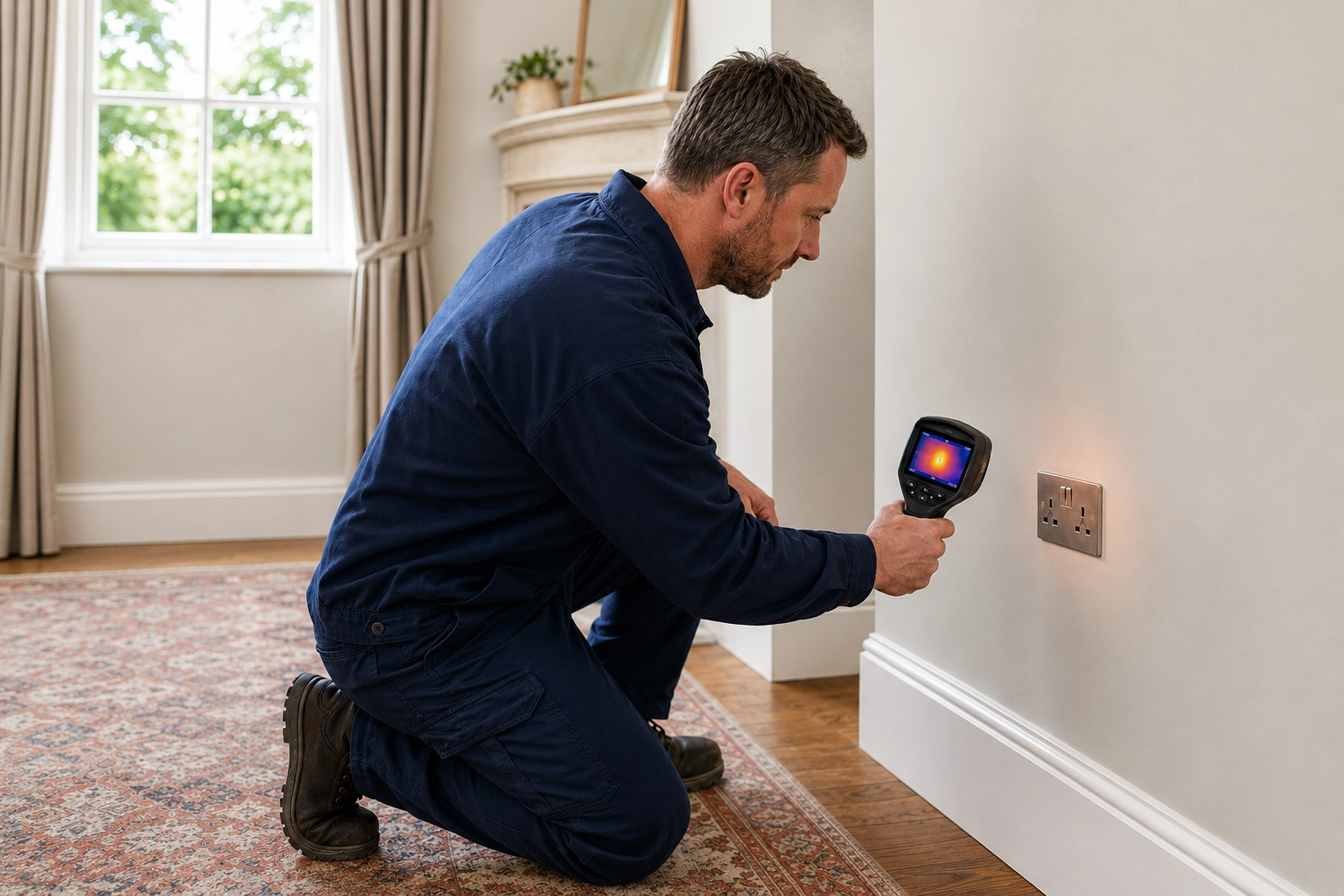
A qualified emergency electrician in Weybridge can test the socket, associated wiring and connected equipment to identify where the heat is coming from.
Can the Socket Be Repaired Immediately?
Many socket faults can be diagnosed and repaired during one visit. The electrician may replace the damaged accessory and inspect the cable and terminals for evidence of overheating.
If the wiring has also been damaged, additional work may be required before the circuit can be used safely.
