

Electrical emergencies can happen in any type of London property, from individual flats and terraced houses to offices, shops and larger managed buildings.
The first priority is not restoring power immediately. It is protecting occupants and avoiding actions that could make the situation more dangerous.
The appropriate response depends on whether you have lost electricity, discovered damaged wiring, noticed overheating or encountered water near electrical equipment.
Stay Away From Visible Electrical Damage
Do not touch exposed conductors, broken sockets or damaged switches. Keep children, customers, employees and other occupants away from the affected area.
Never use tape, tools or household materials to cover exposed electrical components. The circuit may still be live even when the accessory has stopped working.
Responding to Sparks or Burning Smells
Occasional tiny flashes inside certain switches can occur during operation, but visible sparks, crackling, smoke and persistent burning smells require immediate attention.
If it is safe, switch off the relevant circuit or main electrical supply. Do not attempt this if the consumer unit itself is smoking, sparking, wet or unusually hot.
Leave the building and call 999 if there is a fire.
What to Do When the Power Goes Off
First establish whether the outage affects only your property. Look for power in neighbouring buildings and communal areas.
Call 105 if the problem appears to affect the wider electricity network.
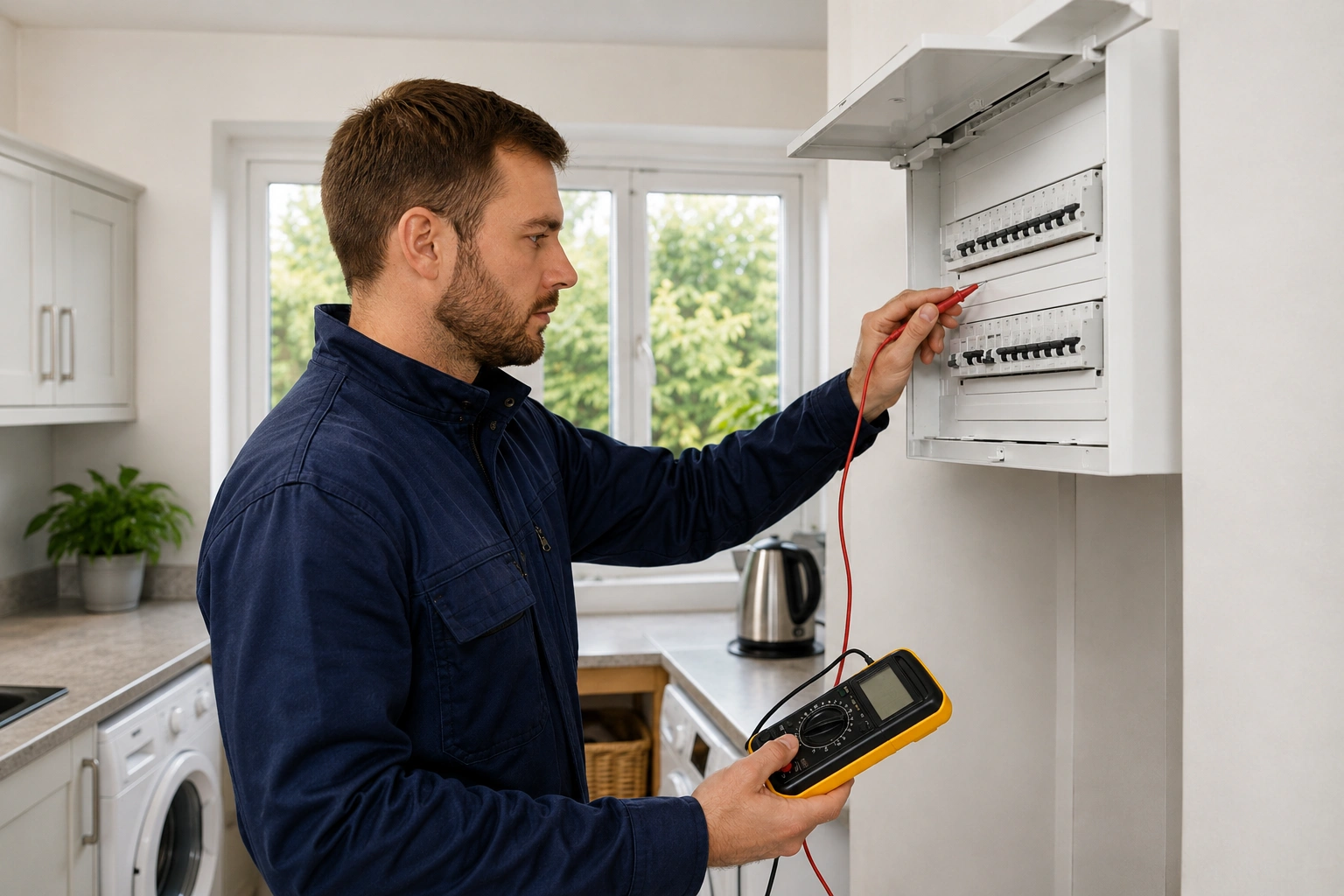
If the outage is limited to your home or business, visually check the consumer unit. Do not remove its cover. A tripped switch may indicate a fault within a circuit or connected appliance.
Electrical Emergencies in Flats
The fault may be within your flat, a communal area or equipment managed by the building owner.
Tell the concierge, freeholder or managing agent if:
- Several flats are affected
- Communal lighting has failed
- The problem involves a shared meter cupboard
- Water is entering from another property
- The affected equipment is outside your flat
You may still need an electrician to determine whether the fault begins inside your individual installation.
Water Near Electrical Equipment
Leaks from bathrooms, kitchens, roofs and neighbouring flats can reach lights, sockets and concealed wiring.
Do not touch wet accessories or stand in water near electrical equipment. If the electricity can be isolated from a dry, safe location, switch it off. Otherwise, keep away and seek urgent assistance.
Electrical equipment should be properly inspected before power is restored.
Electrical Problems in Commercial Premises
Businesses should move staff and customers away from the affected area and follow their established emergency procedures.
Avoid running extension leads through public or wet areas as a temporary replacement for a failed circuit. This can introduce additional trip, overload and electrical risks.
Record which equipment stopped working and whether alarms, refrigeration, payment systems or security equipment have been affected.
Information to Give the Electrician
Provide:
- The full London address and postcode
- The type of property
- Which rooms or systems are affected
- Whether there is heat, smoke or water
- What happened immediately before the fault
- Whether the consumer unit has tripped
- Any access or parking instructions
This helps the electrician assess the urgency and arrive prepared.
When to Arrange Immediate Attendance
You should seek urgent professional help for burning smells, sparking accessories, exposed wiring, repeated tripping, water-damaged electrics and unexplained power loss limited to your property.
A 24-hour emergency electrician serving London can inspect the affected installation, isolate unsafe circuits and carry out a suitable repair where possible.
Need Electrical Help in London?
Do not take risks with a fault you cannot identify safely.
