

Electricity Keeps Cutting Out Esher
An intermittent electrical problem can be particularly frustrating because the system may appear normal by the time an electrician arrives.
Power that switches off and later returns can be caused by a faulty appliance, loose connection, overheating component, tripping protective device or interruption to the external electricity supply.
Although the electricity has returned, the original fault may still be present. Recording when and how the problem happens can make diagnosis easier.
Is It a Network Power Cut?
First establish whether the problem is limited to your property.
Look to see whether neighbouring buildings and streetlights still have power. If the wider area is affected, call 105 to check whether the electricity network operator has recorded an outage.
If only your home, flat or business is affected, the fault may be inside the property’s electrical installation.
Does the Whole Property Lose Power?
A complete power failure may involve the incoming supply, main switch, consumer unit or an RCD protecting several circuits.
If only one section loses electricity, the problem is more likely to affect an individual circuit. Check whether the issue involves:
– Every socket or only some sockets
– All lights or one group of lights
– One room or several rooms
– A garage, extension or outbuilding
– Hardwired equipment
– Communal areas in a flat
Do not remove the consumer-unit cover or open electrical accessories while carrying out these checks.
Appliances That Operate Automatically
Some electrical faults appear random because the responsible appliance switches itself on without direct input.
Examples include:
– Refrigerators and freezers
– Boilers and heating equipment
– Immersion heaters
– Dishwashers and washing machines
– Pumps and ventilation equipment
– Security or exterior lighting
Record the approximate time of each incident. A repeated pattern may indicate which equipment was operating when the power failed.
Loose Electrical Connections
A loose terminal can allow equipment to work intermittently. As the connection carries electricity, it may heat and expand. The circuit can then fail before reconnecting as the component cools or moves.
Warning signs can include:
– Lights flickering before the power fails
– Buzzing or crackling sounds
– Heat near a socket or consumer unit
– A burning-plastic smell
– Discolouration around accessories
Loose connections can generate significant heat and should be investigated promptly.
Overheating Electrical Components
Some protective devices operate when a circuit is overloaded, while other components may begin failing as their temperature increases.
If the fault occurs after several appliances have been used simultaneously, note which equipment was operating. Avoid repeatedly recreating the situation to test it yourself.
The absence of visible smoke does not mean an overheating connection is safe.
Moisture and Weather-Related Faults
Water entering an outside light, socket, garage supply or damaged cable can cause intermittent power problems.
The circuit may begin working again once the affected equipment dries. This temporary recovery does not remove the underlying damage.
Mention whether the fault follows rain, a plumbing leak or water entering any part of the property.
Problems in Flats and Managed Buildings
In an apartment, the fault may be located inside the flat or within communal equipment controlled by the building manager.
Contact the managing agent when:
– Several flats are affected
– Communal lighting has failed
– The problem involves a shared electrical cupboard
– The incoming supply appears affected
– Water is entering from another property
An electrician may still be required to establish whether the individual flat’s installation is operating correctly.
What Information Should You Record?
Before calling an electrician, make a note of:
– The date and time of each interruption
– Which rooms or circuits were affected
– Which appliances were operating
– Whether a breaker or RCD moved
– Any unusual sound, smell or heat
– Whether neighbouring properties had power
– Whether the fault followed rain or a leak
This evidence can be valuable when the electrical system has temporarily returned to normal.
When Should You Request Emergency Help?
Arrange urgent assistance if the interruption is accompanied by sparking, burning smells, overheating, exposed wiring or a consumer unit that will not remain on.
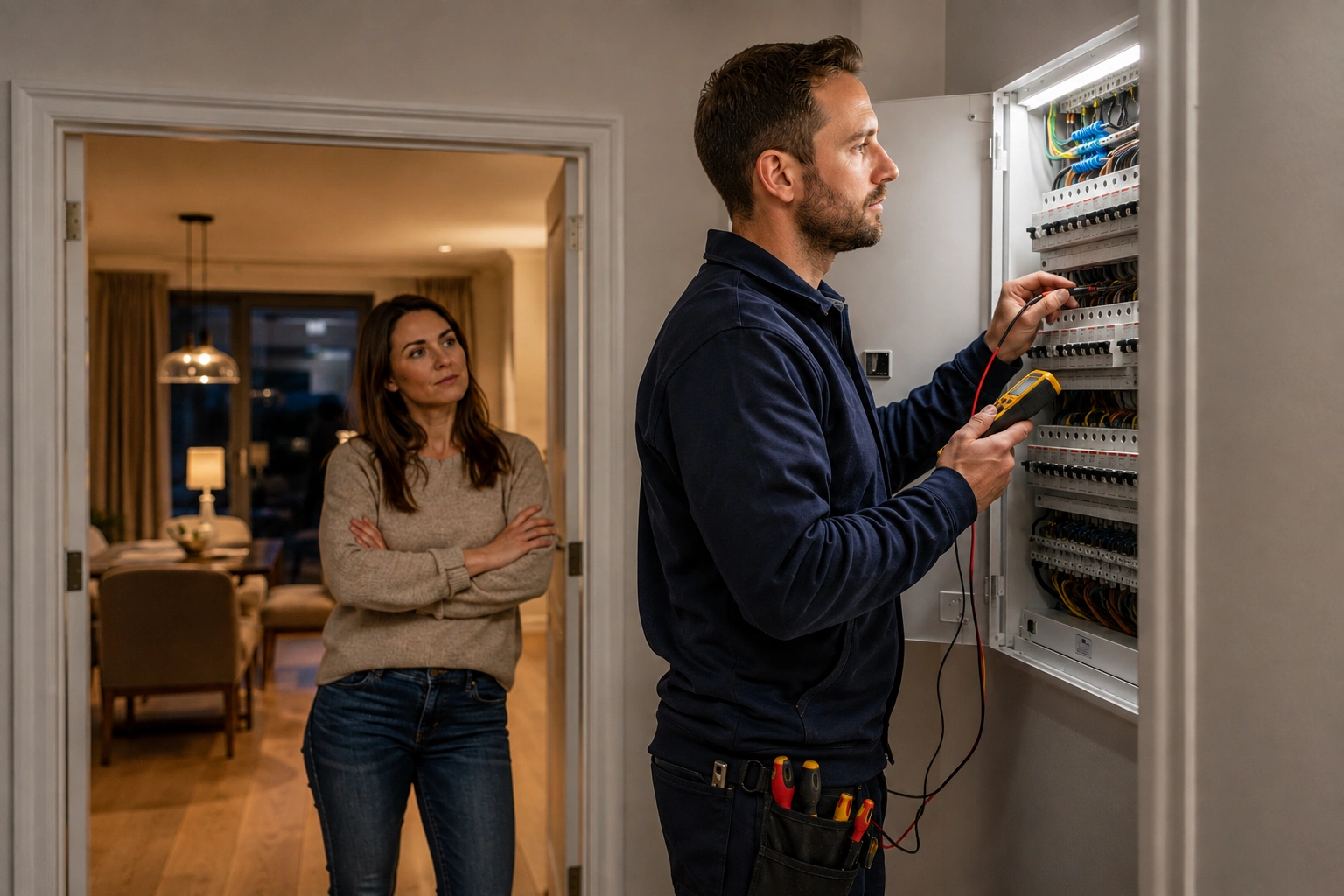
A qualified emergency electrician in Esher can test the installation, identify the affected circuit and isolate unsafe equipment where necessary.
Should You Keep Resetting the Power?
No. If a protective switch trips repeatedly, leave it off. The device may be disconnecting a dangerous fault.
One reset after safely disconnecting a suspected appliance may be reasonable when there are no other warning signs. Stop if the circuit trips again.
