


Why Does My Consumer Unit Keep Tripping?
A consumer unit distributes electricity around your property and contains protective devices designed to disconnect circuits when a problem is detected.
If a breaker or RCD keeps tripping, it is usually reacting to a fault. The protective device should not be bypassed, held in position or repeatedly forced back on.
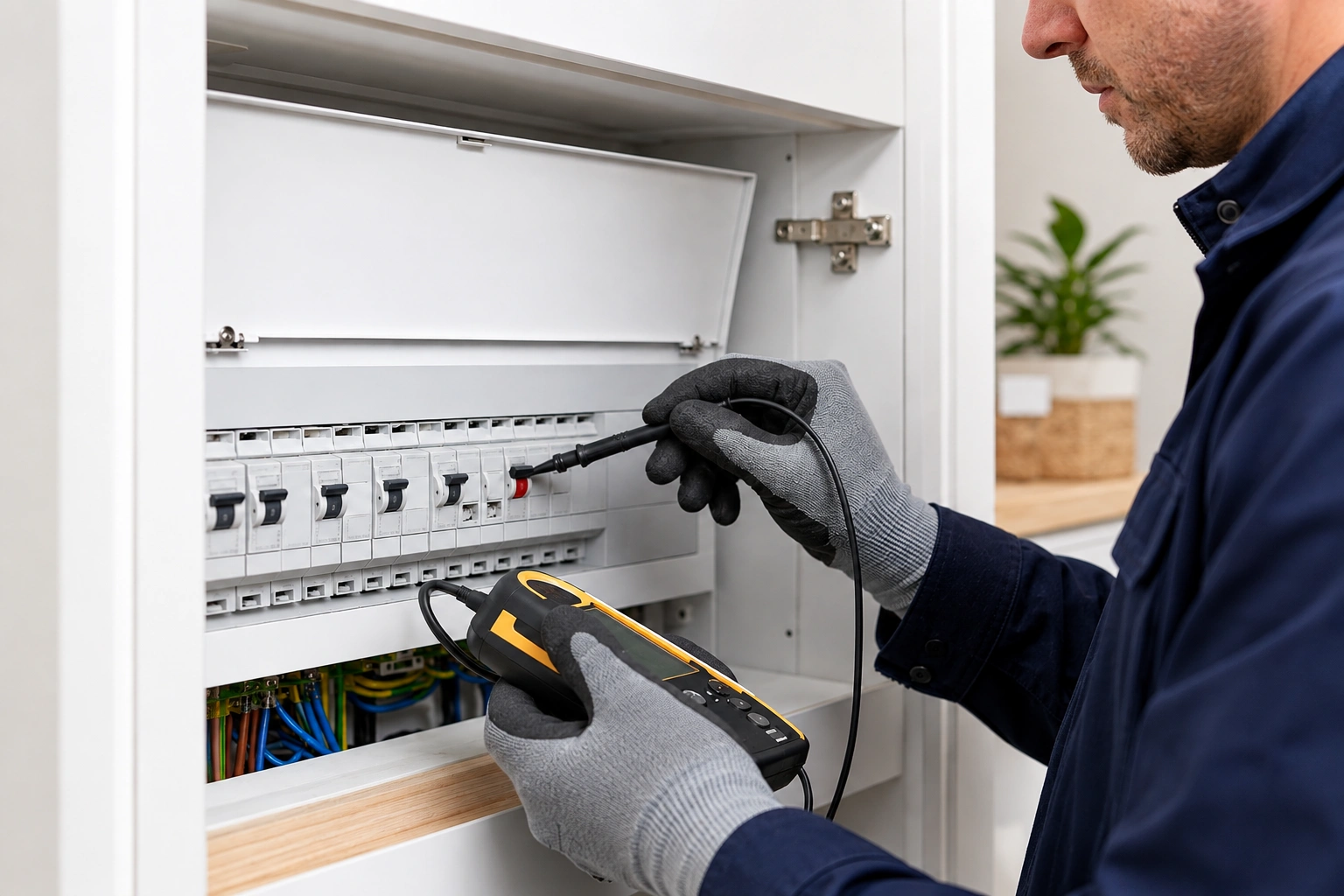
Finding out when the trip occurs can provide useful information, but electrical testing may be required to identify the exact cause.
Faulty Electrical Appliances
Appliances are a common source of tripping. Kettles, washing machines, dishwashers, ovens and outdoor equipment can develop faults that allow current to flow where it should not.
If the problem started immediately after using a particular appliance, unplug it and leave it disconnected. You may then attempt one reset if there are no signs of burning, heat or physical damage.
If the consumer unit continues to trip, the fault may be elsewhere.
Too Many Appliances on One Circuit
Moisture and Water Ingress
Water entering an outside light, socket, garage supply or other electrical accessory can cause an RCD to trip. These faults may appear during rain and then become less noticeable once conditions dry. The temporary return of power does not mean the underlying problem has been resolved. The affected circuit should be tested and the source of the moisture addressed. Cables can be damaged by screws, nails, building work, rodents or general deterioration. Sockets and switches may also develop loose or overheated internal connections. Damage is not always visible. Testing allows an electrician to divide the installation into sections and narrow down the affected circuit. An apparently random fault may depend on when a particular appliance switches itself on. Refrigerators, boilers, immersion heaters and other equipment can operate automatically, making the connection less obvious. Intermittent tripping can also result from several small leakage currents combining or from a fault affected by temperature and moisture. Recording the time of each incident and which appliances were operating may help with diagnosis. Damage to Cables or Accessories
Why Does the RCD Trip at Random Times?
When Should You Stop Resetting It?
Leave the circuit switched off and seek help if:
- It trips immediately after every reset
- You smell burning or melting plastic
- The consumer unit feels unusually warm
- There are sparks or crackling sounds
- Water has entered the property
- Wiring or accessories are visibly damaged
For urgent investigation, contact a local emergency electrician in Woking who can test the installation and isolate the faulty section safely.
Can the Fault Usually Be Repaired During One Visit?
Many tripping problems can be located and repaired during the first attendance, particularly when caused by a damaged accessory or identifiable appliance.
More complex wiring faults may require additional work or specialist components. In those cases, the electrician may be able to isolate the affected circuit while leaving safe, unaffected parts of the property operational.
The important point is to identify why the protective device is tripping—not simply to keep turning it back on.