


Electrical installations can develop faults at any age, but the type of problem often depends on the property, its wiring history and how much demand is placed on its circuits.
Portsmouth contains everything from Victorian terraces and converted flats to modern apartments, rental properties and HMOs. Many buildings have also been extended or altered over time, meaning the electrical installation may contain components installed during several different periods.
Understanding the warning signs can help you arrange professional assistance before a minor fault becomes a serious safety concern.
Consumer Units That Keep Tripping
Circuit breakers and RCDs are designed to disconnect the electricity when they detect certain types of fault. A consumer unit that trips is therefore responding to a possible problem rather than causing it.
Common reasons include:
- A faulty electrical appliance
- Damaged cables or accessories
- Water or moisture reaching the electrics
- Too many appliances operating on one circuit
- Deterioration within the installation
- An earth-leakage fault/span>
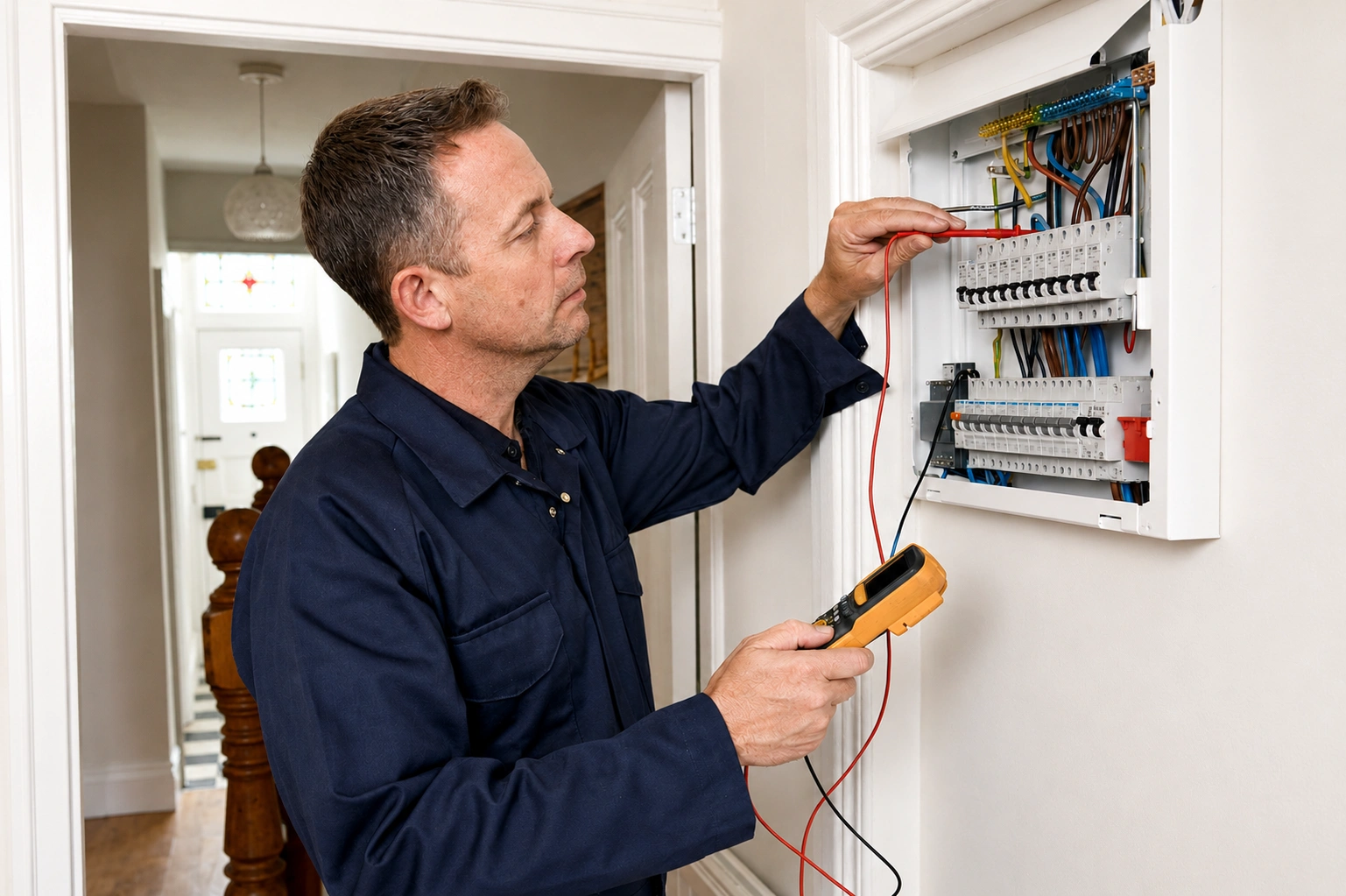
If the consumer unit trips repeatedly, avoid continually resetting it. Unplugging appliances may help identify an obvious cause, but fixed-wiring faults require professional testing.
Older or Damaged Sockets
Loose, cracked and discoloured sockets are more than a cosmetic issue. Internal terminals can loosen over time, creating resistance and excessive heat.
Warning signs include buzzing, scorch marks, intermittent power and plugs that feel unusually hot. Stop using the socket if you notice any of these symptoms.
Extensions and multi-plug adaptors can also place excessive demand on a limited number of sockets. This is particularly relevant in older houses that were not originally designed for the number of electrical devices used today.
Faults in Converted Properties
A house divided into flats may contain separate consumer units, shared areas and wiring added during different conversion or renovation projects.
When an electrical fault occurs, establishing exactly which circuit and property are affected is an important part of the diagnosis. The problem could originate within an individual flat, a communal area or equipment managed by the building owner.
Complete or Partial Power Loss
A power cut affecting several streets is usually the responsibility of the local electricity network. You can call 105 to check whether a wider outage has been reported.
If neighbouring buildings still have power, or only part of your property has been affected, the problem may be inside the installation. A tripped circuit, damaged cable, faulty accessory or consumer-unit problem could be responsible.
Burning Smells and Overheating
Electrical burning smells should always be investigated. The source may not be visible because overheating can occur inside a socket, switch, junction or consumer unit.
If it is safe, turn off the affected circuit or main supply. If there is smoke or fire, leave the building and call 999.
For urgent diagnosis at any time of day, contact an emergency electrician in Portsmouth rather than attempting to dismantle electrical accessories yourself.
When Should You Call an Electrician?
Arrange an inspection when you notice repeated tripping, sparking, burning smells, damaged wiring, hot sockets or unexplained power loss. Electrical testing can distinguish between a faulty appliance and a defect within the fixed installation.
Early investigation can reduce disruption and, more importantly, prevent continued use of an unsafe circuit.