


Electrical Safety in Brighton’s Converted Flats
Brighton has many period houses that have been converted into separate flats. These properties provide distinctive homes, but their electrical arrangements can be more complicated than those in purpose-built apartments.
Different flats may have separate supplies and consumer units, while hallways, entry systems and exterior lights may operate from a communal installation. Electrical work may also have been completed during several renovations by different owners.
Knowing who controls each part of the installation can make an urgent fault easier to resolve.
Electrical Supply Inside the Flat
The leaseholder, landlord or occupier is normally responsible for reporting problems within the individual flat, although the precise responsibility depends on the lease or tenancy.
Faults might include:
- A consumer unit that repeatedly trips
- Sockets that no longer work
- Failed lighting circuits
- Burning smells from electrical accessories
- Damaged internal wiring
- Power loss affecting only one flat
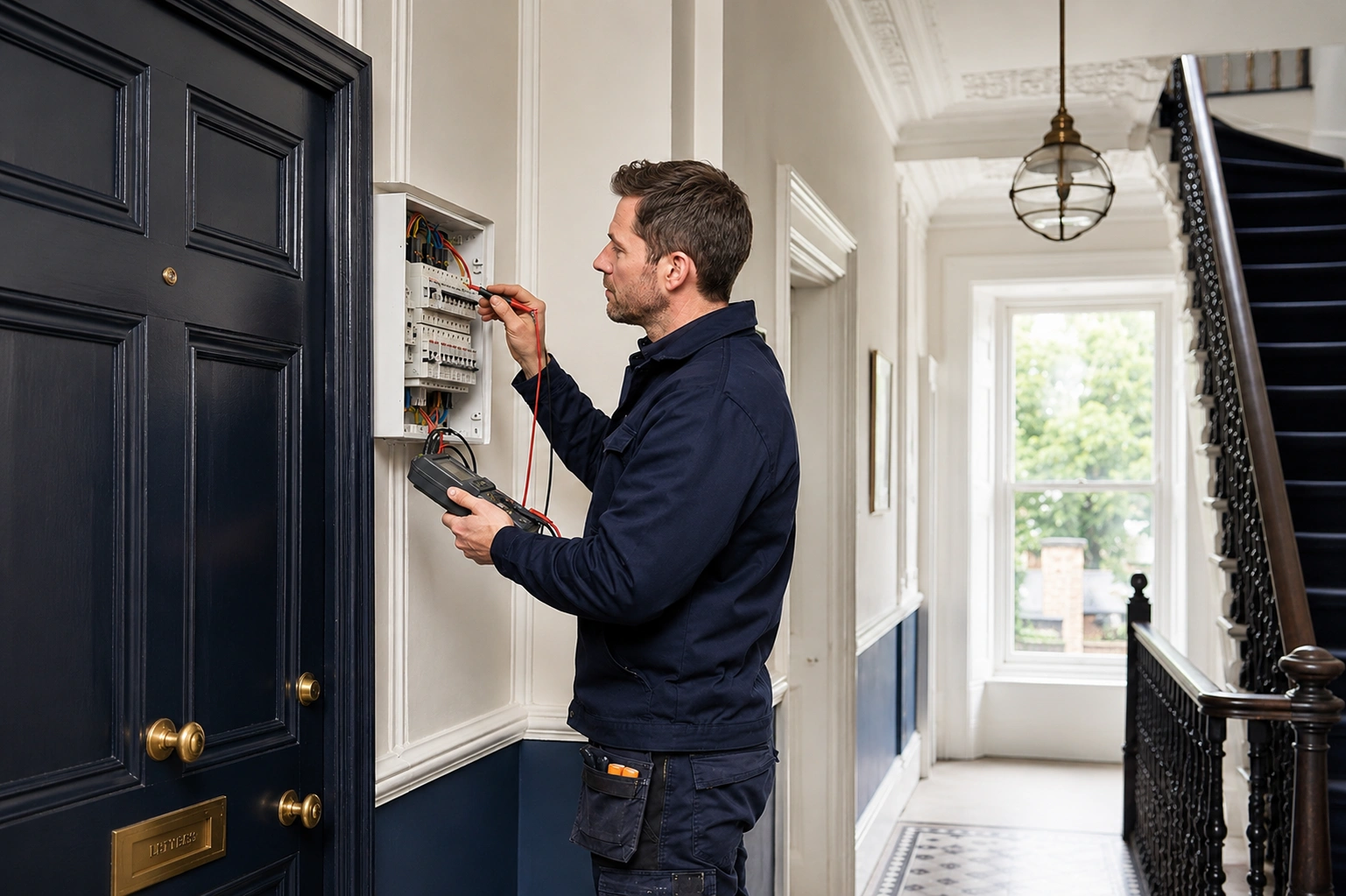
An electrician will need access to the consumer unit and affected rooms to test the installation properly.
Communal Electrical Problems
Hallway lighting, door-entry systems, fire alarms and equipment serving shared areas may be managed by the freeholder, block manager or managing agent.
If several flats lose power simultaneously, the fault might involve communal electrical equipment or the incoming building supply. Reporting which areas are affected helps establish who needs to respond.
Residents should avoid opening cupboards or distribution equipment marked as belonging to the landlord, network operator or building management company.
Electrical Risks in Basement Flats
Basement properties can experience water penetration through walls, floors or external areas. A leak does not have to reach the height of a socket to affect electrical cables or connections hidden within the building.
After flooding or significant water ingress:
- Do not touch wet electrical equipment
- Avoid standing water near sockets or cables
- Switch off the supply only if it can be done safely
- Do not restore power without appropriate checks
- Arrange an electrical inspection
Equipment that appears dry may still contain moisture internally.
Shared Supplies and Meter Cupboards
Converted buildings may have several meters and consumer units located close together. Clearly labelling each supply helps prevent the wrong flat from being disconnected during maintenance or an emergency.
If there is heat, buzzing or a burning smell inside a shared meter cupboard, keep the cupboard closed and contact the building manager or an electrician. If smoke or fire is present, leave the building and call 999.
When Is the Fault an Emergency?
Urgent assistance is appropriate when there are sparks, overheating, exposed live components, smoke, burning smells or a loss of essential electricity that cannot be restored safely.
For faults within an individual property, a qualified emergency electrician covering Brighton and Hove can test the affected circuits and determine whether the problem is confined to the flat or connected to a wider building issue.
Advice for Brighton Landlords and Managing Agents
Keep records of electrical inspections and repairs, ensure tenants know where their consumer unit is located and provide a clear process for reporting problems outside normal working hours.
It is also useful to maintain accurate contact information for whoever manages communal areas. This helps prevent delays when the source of a fault lies outside an individual flat.
Clear responsibilities and prompt testing are particularly important in converted buildings where several households share the same structure.